
Best Sweat Resistant Face Sunscreen for Active Men

Table of Contents
- Best Sweat Resistant Face Sunscreen Picks for 2026
- Quick Comparison: Top Face Sunscreens for Sweaty Workouts
- How to Keep Sunscreen From Sweating Off During Activity
- How Often to Reapply Sunscreen When Sweating
- Best Sport Face Sunscreen for Runners and Golfers
- Water-Resistant Face Sunscreen: What the Label Actually Means
- Choosing the Right Sweat Resistant Sunscreen for Your Skin
- Frequently Asked Questions
Last Updated: October 16, 2026
Best Sweat Resistant Face Sunscreen Picks for 2026
If your sunscreen slides into your eyes the moment you start sweating, you're not alone. According to the Skin Cancer Foundation's guidance on sunscreen and exercise, sweat, toweling off, and high humidity all break down sun protection faster than most people expect. That's the problem we built SLAM Lotion to solve: a face sunscreen that stays put through a full round of golf, a long run, or a tennis match, without the greasy film or coconut smell.
Here's the short answer before we get into the details: the best sweat resistant face sunscreen is one that combines broad-spectrum SPF 50 coverage, 80 minutes of water and sweat resistance, and a finish light enough that you forget you're wearing it. Our top pick is SLAM Lotion's SPF 50 lotion at $17.99, because it absorbs fast, leaves no white cast, and comes in cologne-grade scents instead of the usual beach-bag aroma.

Below, we'll break down our full lineup, explain what "water resistant" actually means on a label, and show you how to keep protection on your face when you're sweating hard.
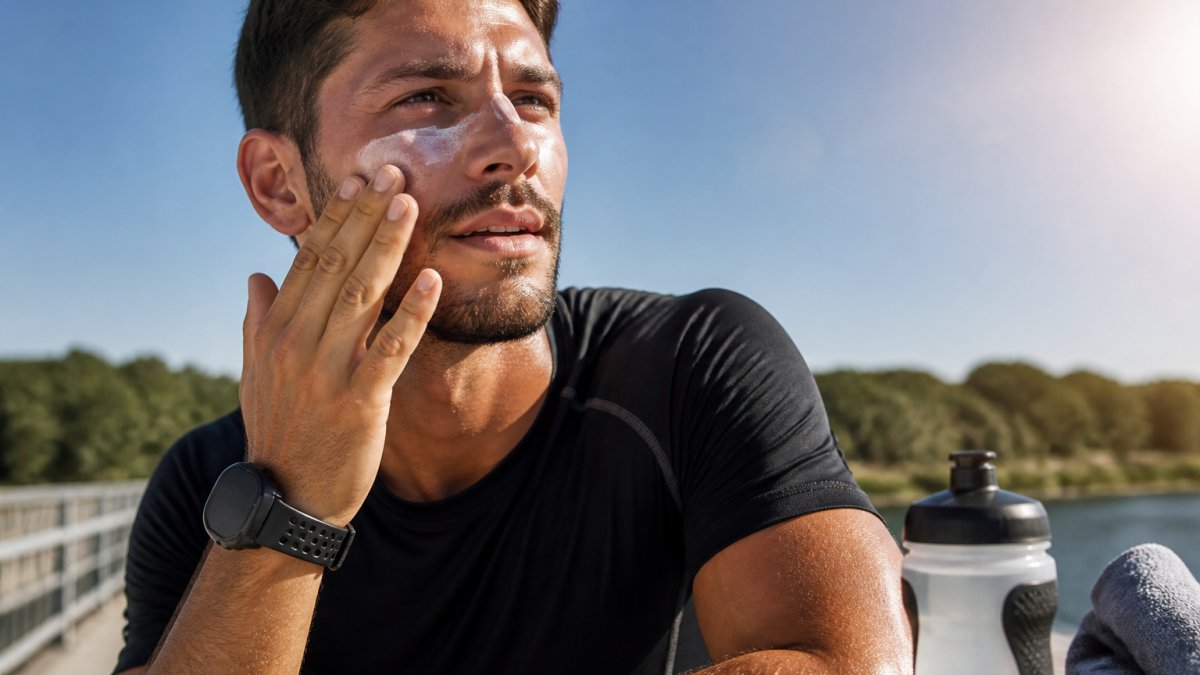
Quick Comparison: Top Face Sunscreens for Sweaty Workouts
Here's the lineup at a glance. Every option below is SPF 50, broad-spectrum, and built to hold up through sweat.
| Product | Format | Price | Best For |
|---|---|---|---|
| SLAM SPF 50 Lotion | Lotion | $17.99 | Best overall daily face protection |
| SLAM Cologne Spray | Spray | $24.99 | Fast reapplication on the move |
| Unscented Sunscreen Lotion | Lotion | $17.99 | Sensitive skin and fragrance-free routines |
| MysteryMan Lotion | Lotion | $17.99 | Bergamot, cedar, patchouli scent |
| GentleMan Lotion | Lotion | $17.99 | Clean, understated daily wear |
The lotion formats win for face use because you control the amount and rub it in fully. Sprays are faster for topping up mid-round.

How to Keep Sunscreen From Sweating Off During Activity
The answer is simpler than most guides make it: apply to dry skin, give it 15 minutes to set, and don't wipe your face with a towel. Sweat alone won't strip a properly applied, water-resistant formula. Toweling is what removes it.
A few habits that make a real difference:
- Apply before you start moving, not once you're already sweating
- Pat your face dry with a towel instead of wiping, then reapply
- Use a stick or lotion on the brow line, where sweat drips most
- Skip moisturizer underneath on hot days; the sunscreen is enough
- Reapply after swimming, heavy toweling, or two hours of exposure
How Often to Reapply Sunscreen When Sweating
Reapply every two hours during normal activity, and every 80 minutes when you're sweating heavily or in the water. The FDA requires that 80-minute water resistance claim to be tested, so it's a real number, not marketing.
That 80-minute window is the ceiling, not a target. If you're playing a two-hour tennis match in July, you're reapplying at least once. Golfers get a small break because a round moves slower, but the back nine still needs a fresh layer.
For spray formats, this is where they earn their keep. A quick pass over the face and neck takes ten seconds and doesn't require clean hands. Keep one in your bag and you'll actually do it.

Best Sport Face Sunscreen for Runners and Golfers
Runners and golfers are both outside for long stretches, but the wear conditions are almost opposite. A runner produces a steady, high-volume sweat that beads on the forehead and migrates downward toward the eyes. A golfer produces less continuous sweat but spends four to five hours in direct sun, often under a hat, with intermittent toweling between holes.
Running and high-sweat cardio. The priority is eye sting, because sweat carries product down the brow and into the eye within the first mile. Formulas that set quickly and stay put on the skin tend to sting less than heavy creams that stay tacky.
Cycling. Wind and airflow dry sweat faster than it accumulates, so the face stays drier than it feels during a run, but the trade-off is that you may not notice how much you're sweating until you stop. Eyewear matters here: sunglasses press against the temples and nose bridge, and that contact point is where sunscreen wears away first. A lotion that absorbs fully, rather than sitting on top of the skin, is less likely to smear onto the lenses.
Hiking. Hikers deal with a mix of sun exposure, altitude, and long duration. The face stays exposed for hours, and a backpack strap can rub against the jaw and neck, wearing product away at the contact point. A lotion that holds up to friction is a better fit than a spray, which can leave uneven coverage that rubs off faster. Reapply at a lunch break and after any extended toweling.
Golf. Golf is a duration problem more than a sweat problem. A round can run four to five hours, and the back nine often falls in the strongest sun of the day. The finish matters because a heavy or greasy lotion feels unpleasant under a hat and can leave residue on the brim. A lightweight lotion that rubs in cleanly is easier to wear for the full round.
Tennis and court sports. Tennis combines high sweat output with frequent toweling between points. The towel is the real enemy here, not the sweat. Every wipe across the forehead removes a layer of product, so plan on reapplying at each changeover if you're toweling heavily. A stick format works well for the brow line because you can apply it without clean hands and without looking in a mirror.
What to look for across all of these. A formula that sets in under 15 minutes, doesn't run when you sweat, and holds up to at least one towel wipe before it needs replacing. Broad-spectrum SPF 50 covers the UV side; the wear side is about how the product behaves on your skin once you start moving.
Water-Resistant Face Sunscreen: What the Label Actually Means
Water-resistant sunscreen is a product that maintains its labeled SPF after 40 or 80 minutes of water immersion, as defined by FDA testing standards. It is not waterproof, and no sunscreen sold in the US is allowed to claim that.
Here's the distinction most people miss: water resistance and sweat resistance are tested differently. Water resistance is a regulated claim with a specific test protocol. Sweat resistance is not a standardized label term in the same way, so when a brand says "sweat resistant," it's describing performance during activity, not a government-certified measurement.
What that means practically: a product labeled "water resistant (80 minutes)" has passed a real test. Treat that number as your reapplication timer during sweaty activity, and treat "sweat-proof" as marketing language with no fixed definition. The FDA's sunscreen labeling requirements spell out exactly which claims are regulated and which are not.
Choosing the Right Sweat Resistant Sunscreen for Your Skin
Skin type changes which formula works, not just which one feels nice. The two big families are mineral (zinc oxide and titanium dioxide) and chemical (organic UV filters like avobenzone, homosalate, and octisalate), and they behave differently once you start sweating. Matching the family to your skin is the fastest way to avoid the two most common complaints: breakouts and eye sting.
Acne-prone skin. The concern is pore clogging, not the UV filters themselves. Heavy creams and oil-based formulas are the usual culprits, so a lightweight lotion or gel-cream that absorbs fully is the safer bet. Look for the words "non-comedogenic" on the label, which means the manufacturer tested it for pore clogging.
Oily skin. Shine is the main complaint, and sweat makes it worse. Chemical formulas tend to feel lighter and dry down faster than mineral ones, which can sit on top of the skin and look greasy. A matte or dry-touch finish helps, and a lotion beats a cream.
Dry skin. Mineral formulas can feel drying because zinc oxide sits on the surface and doesn't add moisture. A lotion with added emollients, or a chemical formula that spreads easily, tends to be more comfortable.
Sensitive or reactive skin. Fragrance is the most common trigger for irritation, so a fragrance-free formula is the first thing to look for. Mineral formulas are often recommended for reactive skin because zinc oxide and titanium dioxide are less likely to cause irritation than some chemical filters, though individual reactions vary.
Eye-sensitive skin. This is the most common complaint among people who sweat during activity, and it's usually about migration rather than the formula itself. Sweat carries product from the brow and hairline down into the eye, so the fix is often application technique as much as product choice.
Darker skin tones. White cast is the main concern, and it's more visible with mineral formulas because zinc oxide and titanium dioxide leave a visible residue. Micronized or tinted mineral formulas reduce the cast, and most chemical formulas leave no cast at all. If you're choosing a mineral formula, look for one labeled sheer or tinted rather than opaque.
Combination skin. Most people fall here, with an oily T-zone and drier cheeks. A lightweight lotion that absorbs quickly works for both areas, and you can apply slightly less to the forehead and nose if shine is a problem there.
How to decide in thirty seconds. If you break out easily, go lightweight and non-comedogenic. If you're oily, go chemical and matte. If you're dry, go lotion with emollients. If you're sensitive or eye-sensitive, go fragrance-free and consider mineral. If white cast is your concern, go chemical or tinted mineral. Then pick the format that matches your activity, and reapply on schedule.
Frequently Asked Questions
How to keep sunscreen from sweating off?
Apply sunscreen 15 to 20 minutes before you start sweating so it can bind to your skin. Use a water-resistant formula labeled for 80 minutes, and avoid wiping your face with a towel. If you must wipe, pat gently instead of rubbing. Reapply every two hours or right after heavy sweating. A lightweight, non-greasy lotion or spray absorbs faster and stays put better than heavy creams.
Are sunscreens really sweat-proof?
No sunscreen is truly sweat-proof. The FDA regulates water resistance claims, not sweat-proof claims, so any product labeled sweat-proof is using marketing language. Water-resistant sunscreens are tested to stay effective for either 40 or 80 minutes while swimming or sweating. After that window, you need to reapply. Look for an 80-minute water-resistant formula and plan to reapply during long outdoor sessions.
How often should you reapply sunscreen during a workout?
Reapply every two hours during continuous activity, or sooner if you are sweating heavily. If your sunscreen is labeled 80-minute water resistant, reapply after that window if you are still outside. For a two-hour tennis match or long run, plan at least one reapplication. Carry a travel-size spray or stick in your bag so reapplying takes seconds, not minutes.
What should you look for in a face sunscreen for sweaty skin?
Look for SPF 30 or higher with broad-spectrum coverage, an 80-minute water-resistance label, and a lightweight, non-greasy formula. If you have sensitive eyes, choose a lotion or stick over a spray to avoid mist drifting into your eyes. For darker skin tones, pick a formula that rubs in clear with no white cast. A scent you actually enjoy makes daily wear easier.
Sweat, sun, and a long day outside will find every weak spot in your sun protection routine. SLAM Lotion builds SPF 50 face sunscreen for men who want serious coverage without the grease, the white cast, or the tropical scent. Our lineup includes broad-spectrum lotions and sprays with cologne-grade fragrances, water and sweat resistance for 80 minutes, and a formula that absorbs fast and moisturizes while it protects. Shop now and find your scent before your next round.